25 Surprising Things About Los Angeles Weather & Climate
Los Angeles weather is often perceived as predictable, but a closer look reveals a complex tapestry of microclimates and unexpected phenomena. From the sudden downpours of the rainy season to the effects of elevation and coastal fog, the city’s climate can be both surprising and challenging. Understanding these elements is essential for residents and visitors alike, especially when considering the implications of climate change on local weather patterns. What insights might these variations expose?
The Rainy Season Surprises
Los Angeles weather often defies expectations, particularly during its rainy season.
You might encounter rainy surprises that catch even seasoned locals off guard. These unexpected storms can arise from shifting weather patterns, leading to sudden downpours.
The city’s topography also plays an essential role, intensifying precipitation in certain areas. Understanding these factors can help you better prepare for the anomalies of L.A.’s rainy season.
Microclimates: A City of Weather Zones
Southern California is known for its diverse microclimates, with over 100 distinct weather zones spread throughout the Los Angeles area.
These zones create significant temperature fluctuations, influenced by factors like elevation and proximity to the coast. Coastal breezes further enhance these variations, cooling inland regions while maintaining warmth near the shoreline.
Understanding these microclimates helps you navigate the region’s unique weather patterns effectively.
The Santa Ana Winds Phenomenon
Among the various weather phenomena in the Los Angeles area, the Santa Ana winds stand out for their dramatic impact on local conditions.
These winds create significant effects, including:
- Elevated fire risks due to dry conditions.
- Warm nights that disrupt typical temperature patterns.
- Weather alerts issued during peak periods.
- Historical events tied to severe local impact.
Understanding these elements is essential for residents.
Coastal Fog: A Morning Mystery
What causes the enchanting coastal fog that blankets Los Angeles in the early morning hours? This coastal phenomenon arises when cool ocean air meets warmer land temperatures, causing moisture to condense into fog.
During foggy mornings, you may notice reduced visibility and a unique atmosphere. Understanding this process helps you appreciate the intricate interplay between ocean currents and local weather patterns.
Earthquake Weather: Fact or Fiction?
While many believe that specific weather conditions can predict earthquakes, the concept of “earthquake weather” remains largely a myth.
Here are four key points to examine:
- No scientific evidence links weather to seismic activity.
- Earthquake myths often arise from anecdotal experiences.
- Seismic events occur randomly, unaffected by atmospheric conditions.
- Focus on preparedness rather than weather patterns.
Temperature Variations Across Neighborhoods
As you explore Los Angeles, you’ll quickly notice that temperature variations can be significant from one neighborhood to another, influenced by factors like elevation, proximity to the ocean, and urban density.
These neighborhood climates can lead to unexpected temperature extremes; for instance, coastal areas are often milder, while inland regions experience higher heat levels.
Understanding these differences is essential for effective planning and comfort.
The Impact of Urban Heat Islands
Temperature variations across neighborhoods aren’t just a matter of geography; they also reveal the significant impact of urban heat islands (UHIs) in Los Angeles.
To combat UHIs and promote heat mitigation, consider these strategies:
- Implement urban gardening initiatives.
- Increase tree canopy coverage.
- Utilize reflective roofing materials.
- Encourage green infrastructure development.
These actions can effectively cool urban areas and enhance community resilience.
Droughts and Water Conservation Efforts
Although droughts are a recurring issue in Los Angeles, they demand urgent attention and proactive water conservation efforts.
Water scarcity affects both the environment and residents’ daily lives. Implementing sustainable initiatives, such as xeriscaping and rainwater harvesting, can greatly reduce water consumption.
Rare Snowfall in the Mountains
Water conservation efforts in Los Angeles highlight the region’s diverse climate challenges, including the rare phenomenon of snowfall in its mountainous areas.
Understanding this occurrence involves considering:
- Snow accumulation varies greatly.
- Mountain temperatures can drop unexpectedly.
- Elevation plays an essential role.
- Climate change affects patterns.
These factors contribute to the unique dynamics of snowfall, making it an intriguing aspect of Los Angeles weather.
The Role of the Pacific Ocean
The Pacific Ocean plays an essential role in shaping Los Angeles weather patterns, influencing everything from daily temperatures to seasonal precipitation.
Ocean currents regulate coastal temperatures, preventing extreme heat. Additionally, the marine layer, formed by cool ocean air meeting warm land, often blankets the city, providing natural air conditioning.
This dynamic interplay is vital for maintaining the region’s unique climate characteristics.
LA’s Hottest Day Records
Los Angeles has recorded some astonishingly high temperatures, with the highest reaching a blistering 121°F (49°C) in July 2021.
These hottest days showcase significant climate trends that warrant attention:
- Increased frequency of record temperatures
- Urban heat island effect
- Climate change implications
- Variability in seasonal temperatures
Understanding these factors is essential for preparing for future extremes in LA’s climate.
Thunderstorms: When They Do Occur
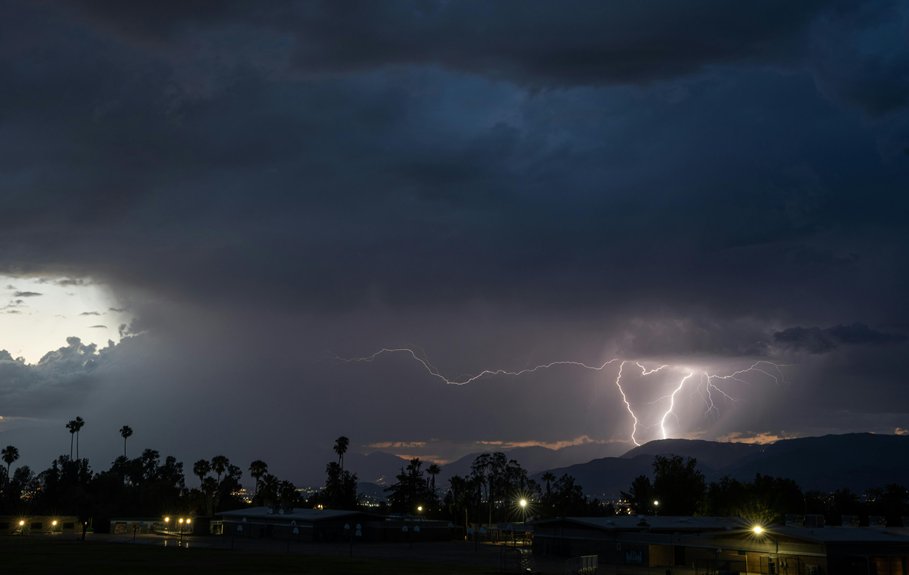
Although thunderstorms are infrequent in Southern California, they can occur under specific atmospheric conditions, particularly during late summer and early fall.
When they do, it’s essential to follow thunderstorm safety tips, such as seeking shelter and avoiding metal objects.
These storms also present unique thunderstorm photography opportunities, showcasing dramatic skies and lightning, so be ready to capture the moment safely.
The Influence of El Niño and La Niña
When significant shifts in ocean temperatures occur, they can profoundly affect Los Angeles weather patterns through the phenomena known as El Niño and La Niña.
Here are some key influences:
- El Niño patterns often bring increased rainfall.
- La Niña impacts typically lead to drier conditions.
- Temperature fluctuations affect local ecosystems.
- Weather extremes may become more pronounced.
Understanding these patterns is essential for forecasting.
Seasonal Changes in Flora and Fauna
As the seasons shift in Los Angeles, the local flora and fauna undergo significant transformations that reflect the region’s diverse climate.
Flora adaptations, such as drought-resistant leaves and seasonal flowering, optimize survival.
Meanwhile, fauna migrations occur as species seek suitable habitats and food sources.
These seasonal changes illustrate the intricate relationships between climate and biodiversity, highlighting the resilience of life in this unique environment.
The Dry Side of Humidity
Los Angeles weather is characterized by its paradoxical relationship with humidity, often leading to dry conditions that can be misleading.
While humidity levels fluctuate, the actual moisture content in the air remains low.
Consider these factors:
- Coastal influence
- Temperature variations
- Urban heat islands
- Seasonal shifts
These elements contribute to the perception of humidity, despite the arid reality typical of the region.
Fire Season and Air Quality Alerts
Although fire season is a recurring phenomenon in Southern California, its impact on air quality can often catch residents off guard.
During this time, you should prioritize fire safety and stay informed about smoke advisories.
Poor air quality can arise from wildfires, leading to health risks.
Monitoring local alerts guarantees you’re prepared and can take necessary precautions for your well-being.
Average Humidity Levels Throughout the Year
While fire season and its accompanying air quality alerts demand attention, understanding average humidity levels throughout the year is equally important for traversing Los Angeles weather.
Consider these humidity trends:
- Winter: 60-70% average
- Spring: 50-60% average
- Summer: 40-50% average
- Fall: 50-60% average
Seasonal fluctuations affect comfort levels and can influence outdoor activities, making awareness essential for residents and visitors alike.
How Weather Affects Traffic Patterns
Weather conditions considerably influence traffic patterns in Los Angeles, impacting everything from commute times to accident rates.
Adverse weather patterns, like rain, increase traffic congestion and diminish road safety, altering commuter behavior. During rush hour, reduced driving conditions elevate accident frequency.
Conversely, improved air quality during mild weather may encourage public transport use, optimizing travel times and alleviating congestion.
The Best Time for Outdoor Activities
When planning outdoor activities in Los Angeles, timing is essential, as the city’s weather can vary greatly throughout the year.
The ideal months for outdoor festivals and events are:
- March: Spring blooms, mild temperatures.
- April: Pleasant weather, numerous festivals.
- October: Warm days, vibrant autumn events.
- November: Clear skies, less crowded activities.
Choosing these months maximizes your enjoyment and minimizes weather-related disruptions.
Surprising Weather-Related Events
Though often associated with sunshine and mild temperatures, Los Angeles can surprise residents and visitors alike with its unpredictable weather events.
You might experience unexpected downpours that disrupt typical sunny days or endure record heatwaves that challenge the region’s norms.
These phenomena highlight the city’s varying climate patterns, reminding you to always stay prepared for sudden changes in weather conditions.
Climate Change Effects on LA
Climate change greatly impacts Los Angeles, intensifying weather variability and presenting new challenges for residents.
To effectively address climate impacts, urban adaptation strategies must focus on:
- Increasing green spaces to mitigate heat.
- Enhancing water conservation practices.
- Upgrading infrastructure for extreme weather resilience.
- Promoting sustainable transportation to reduce emissions.
These approaches are essential for ensuring a livable future in an evolving climate landscape.
The Influence of Elevation on Weather
Elevation greatly influences weather patterns in Los Angeles, creating a diverse microclimate across the region.
The elevation effects lead to significant altitude variations, resulting in cooler temperatures and increased precipitation in higher areas like the San Gabriel Mountains.
Conversely, lower elevations experience warmer, drier conditions.
Understanding these dynamics helps you appreciate how elevation shapes your local weather experiences throughout the city.
The Importance of UV Protection
Why is UV protection essential in Los Angeles? The high UV Index necessitates vigilance for skin protection during outdoor activities.
Consider these key practices for effective sun safety:
- Regular sunscreen application to prevent long-term effects.
- Wearing sunglasses to protect your eyes.
- Seeking shade during peak sun hours.
- Participating in awareness campaigns to promote sun safety.
Stay proactive to safeguard your health!
Unpredictable Weather During Film Shoots
When planning a film shoot in Los Angeles, understanding the unpredictable weather patterns can make or break your production schedule.
Film schedule disruptions often arise from unexpected rainstorms, creating wardrobe challenges and necessitating location adaptability.
To mitigate crew morale fluctuations, implement robust equipment protection strategies and develop contingency plans.
Relying on accurate weather forecasting is essential for maintaining production efficiency in this dynamic environment.
The Role of Weather in Los Angeles Culture
Although you might think of Los Angeles as a sun-soaked paradise, the weather plays a crucial role in shaping the city’s culture and lifestyle.
It influences:
- Fashion choices, emphasizing casual weather attire.
- Outdoor activities, reinforcing sunny stereotypes.
- Social gatherings, often planned around clear skies.
- Tourism trends, attracting visitors year-round.
Understanding this connection can deepen your appreciation for LA’s vibrant culture.