25 Things You Didn’t Know About the History of Hollywood
You might think you know Hollywood, but its history is far more complex than the glitz and glamour suggests. From its humble beginnings as a farming community to the establishment of the first film studio, each phase reveals layers of cultural evolution. The Hollywood Sign, originally meant for real estate, and the transformation brought by the Hays Code offer insights into the industry’s shifting values. What other surprising truths lie beneath the surface?
The Birth of Hollywood: A Farming Community
Although Hollywood is now synonymous with the glitz and glamour of the film industry, its origins trace back to a modest farming community in the late 19th century.
Early settlers cultivated the land, establishing irrigation systems and farming practices that laid the foundation for future growth. This agrarian backdrop influenced community dynamics, shaping interactions that would eventually support the burgeoning entertainment industry.
The First Film Studio: Nestor Studios
Nestor Studios, established in 1911, marked a pivotal moment in Hollywood’s evolution from a quiet farming community to a vibrant center for the film industry.
As the first film studio, it pioneered early filmmaking techniques, setting the stage for future productions.
The Origin of the Hollywood Sign
As Hollywood began to solidify its status as the epicenter of film production, a significant symbol emerged that would come to represent the entire industry: the Hollywood Sign.
Initially erected in 1923 as an advertisement for a housing development, it transformed into a cultural icon, embodying Hollywood’s ambition and dreams.
This landmark’s history reflects the evolution of the film industry and its global influence.
The First Motion Picture Ever Made
While many films have claimed the title of the first motion picture, it’s essential to recognize that the creation of moving images was a gradual process involving various inventors and innovations.
Importantly, the silent short “Roundhay Garden Scene,” filmed by Louis Le Prince in 1888, showcases the groundbreaking work of film pioneers, laying the foundation for the cinematic world you enjoy today.
Hollywood’s Role in the Silent Film Era
During the silent film era, Hollywood emerged as the epicenter of cinematic innovation, with over 200 feature films produced annually by the late 1920s.
You’d witness the pioneering use of silent film techniques, like expressive body language and title cards, which brought stories to life.
Early film stars, such as Charlie Chaplin and Buster Keaton, captivated audiences, shaping the industry’s future and laying the groundwork for sound films.
The First Academy Awards Ceremony
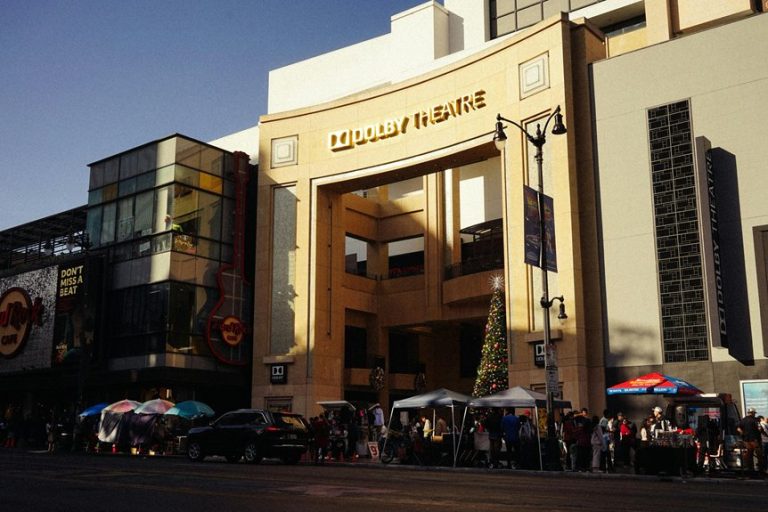
The silent film era set the stage for a landmark event in Hollywood’s history: the first Academy Awards ceremony held on May 16, 1929.
You’ll find it fascinating how this event showcased:
- Oscar controversies that would shape future ceremonies.
- The emergence of red carpet fashion, setting trends for years to come.
- A shift in how films were celebrated and recognized in the industry.
The Birth of the Hollywood Walk of Fame
As Hollywood’s film industry flourished in the mid-20th century, the need to honor its stars and their contributions became increasingly apparent.
The Hollywood Walk of Fame emerged as a solution, introducing sidewalk stars that celebrate achievements in film, television, music, and more.
Star ceremonies became iconic events, drawing fans and media attention, further cementing Hollywood’s status as a cultural epicenter.
The Influence of the Golden Age of Hollywood
Hollywood’s Golden Age, spanning from the late 1920s to the early 1960s, profoundly shaped not just American cinema but global culture.
The allure of Golden Age Glamour and the charisma of Silver Screen Icons created lasting impacts, including:
- Establishing cinematic storytelling standards.
- Inspiring fashion and lifestyle trends.
- Influencing international film movements.
These elements continue to resonate, defining the essence of modern filmmaking.
The Studio System and Its Impact
While the allure of classic films often captures audiences, the underlying structure of the studio system was pivotal in shaping how these cinematic masterpieces came to life.
Studio contracts dictated talent agency relationships, impacting creative control and production schedules.
Rivalries among studios influenced marketing strategies, affecting box office performance and film distribution, while actor unions fought for fair profit margins within this tightly controlled industry landscape.
The Rise of Independent Filmmaking
Emerging from the constraints of the studio system, independent filmmaking has redefined the cinematic landscape by prioritizing creativity and personal expression over commercial viability.
This movement embodies an independent spirit, emphasizing:
- Authentic storytelling.
- Innovative techniques through DIY filmmaking.
- Diverse voices often overlooked in mainstream cinema.
You’ll find that these elements foster a unique environment where artistic freedom thrives, reshaping viewer expectations.
The First Color Film: Technicolor Innovations
As filmmakers sought to push the boundaries of visual storytelling, the introduction of Technicolor in the early 20th century marked a pivotal moment in cinema history.
These technicolor innovations transformed the industry, enabling rich color palettes that enhanced artistic expression.
Hollywood’s Connection to World War II
Hollywood’s connection to World War II profoundly shaped both the film industry and the cultural landscape of America.
The era saw:
- Propaganda films and patriotic narratives that boosted morale.
- Celebrity enlistment and military collaborations highlighting war heroes.
- Film censorship shaping wartime blockbusters and documentaries.
These elements aligned Hollywood with government efforts, creating a powerful tool for Hollywood propaganda during a critical time in history.
The Impact of Television on Hollywood
While the rise of television in the mid-20th century shifted entertainment consumption, it also forced Hollywood to adapt to an evolving landscape.
Television ratings dictated program development, leading to sitcom evolution and the emergence of drama series.
Cable networks and reality shows transformed audience engagement, while streaming platforms reshaped viewing habits, highlighting the significant cultural influence of television actors and their roles in this dynamic industry.
The Influence of the Hays Code
The Hays Code, formally known as the Motion Picture Production Code, emerged in the early 1930s as a direct response to the changing social landscape and growing concerns over morality in film.
Its influence shaped:
- Hays Code Enforcement created strict guidelines.
- Censorship Impact limited creative expression.
- Public Reaction led to code revisions.
Ultimately, the legacy effects still resonate in today’s film morality discussions and industry regulations.
The Creation of the Hollywood Blacklist
As fears of Communist influence grew in the late 1940s and early 1950s, a climate of paranoia swept through the film industry, leading to the establishment of the Hollywood Blacklist.
This blacklist’s origins lay in political persecution fueled by anti-communist sentiment, resulting in creative censorship and industry repercussions for notable figures.
Its legacy effects profoundly impacted artistic freedom and shaped Hollywood’s historical context for years to come.
The Rise of Blockbuster Films
Emerging from the shadows of the Hollywood Blacklist, the 1970s marked a transformative era in the film industry, characterized by the rise of blockbuster films that reshaped audience expectations and box office dynamics.
Key blockbuster trends included:
- High production values
- Star-driven marketing
- Franchise potential
These elements fueled a cultural shift, leading you to anticipate larger-than-life experiences at the cinema.
The Evolution of Special Effects
While many filmgoers might focus on storytelling and star performances, the evolution of special effects has undeniably transformed the cinematic experience.
From practical effects in early films to CGI advancements today, technology integration has revolutionized illusion creation.
Animation techniques and sound design enhance visual storytelling, making the special effects history a vital component that shapes audience perception and engagement in modern cinema.
The Importance of Film Festivals
Film festivals serve as critical platforms for filmmakers to showcase their work, connect with audiences, and gain industry recognition.
Their significance lies in:
- Exposure: Independent films can reach wider audiences.
- Networking Opportunities: Filmmakers meet industry professionals, fostering collaborations.
- Recognition: Awards can catapult careers, validating artistic efforts.
The Digital Revolution in Filmmaking
As film festivals spotlight independent voices, the landscape of filmmaking has been dramatically reshaped by the digital revolution.
Digital filmmaking has lowered production costs and democratized access to technology, allowing diverse creators to share their stories.
Furthermore, virtual reality is pushing boundaries, offering immersive experiences that engage audiences in unprecedented ways.
This evolution challenges traditional storytelling, paving the way for innovative narratives and formats.
The Role of Diversity in Hollywood’s History
Diversity has played an essential role in shaping Hollywood’s identity, influencing not only the stories told but also the industry’s overall dynamics.
Consider how:
- Diverse representation enriches cultural narratives, reflecting societal complexities.
- Inclusion fosters innovation, leading to unique storytelling perspectives.
- Audience engagement increases when films resonate with varied experiences.
These factors highlight diversity’s critical impact on Hollywood’s evolution and relevance.
The Influence of Foreign Cinema on Hollywood
While Hollywood often prides itself on its unique storytelling, the influence of foreign cinema has undeniably shaped its narratives and techniques.
Foreign influences manifest through cinematic exchanges, where international directors introduce innovative storytelling techniques and visual styles.
Cultural adaptations break language barriers, appealing to global audiences, while artistic collaborations spark genre innovations, enriching Hollywood’s creative landscape and expanding its artistic horizons.
The History of Film Preservation
Although many films from the early 20th century have been lost to time, the history of film preservation reveals a dedicated effort to safeguard cinematic heritage.
Key aspects include:
- Film archives that house invaluable works.
- Preservation techniques addressing restoration challenges.
- Digital preservation ensuring access amid funding constraints.
These efforts highlight the historical significance of film conservation and the role of archival institutions in protecting our cultural legacy.
The Emergence of Streaming Services
As film preservation efforts work to maintain the legacy of cinema, the emergence of streaming services has dramatically reshaped how audiences access and consume films.
The streaming competition has intensified, pushing platforms to invest heavily in original content. This shift not only democratizes viewing options but also transforms narrative storytelling, allowing diverse voices to flourish and changing the landscape of Hollywood forever.
The Future of Hollywood: Trends to Watch
In an era where technology evolves at an unprecedented pace, the future of Hollywood presents an intriguing landscape marked by several key trends that are set to redefine the film industry.
- Virtual reality experiences will enhance storytelling.
- Audience engagement will drive interactive content.
- Emphasis on diverse narratives will broaden perspectives.
These trends indicate a shift towards immersive, participatory cinema that resonates with modern viewers.
Hollywood’s Cultural Impact Around the World
While Hollywood’s influence may seem like a purely American phenomenon, its cultural impact resonates globally, shaping identities, values, and perceptions across diverse societies.
You see, global cinema thrives on cultural exchange, with international collaborations and foreign remakes enriching narratives.
Film festivals foster this dialogue, promoting cinematic diplomacy and cross-cultural storytelling that captivates global audiences, ultimately redefining how we connect through shared experiences.